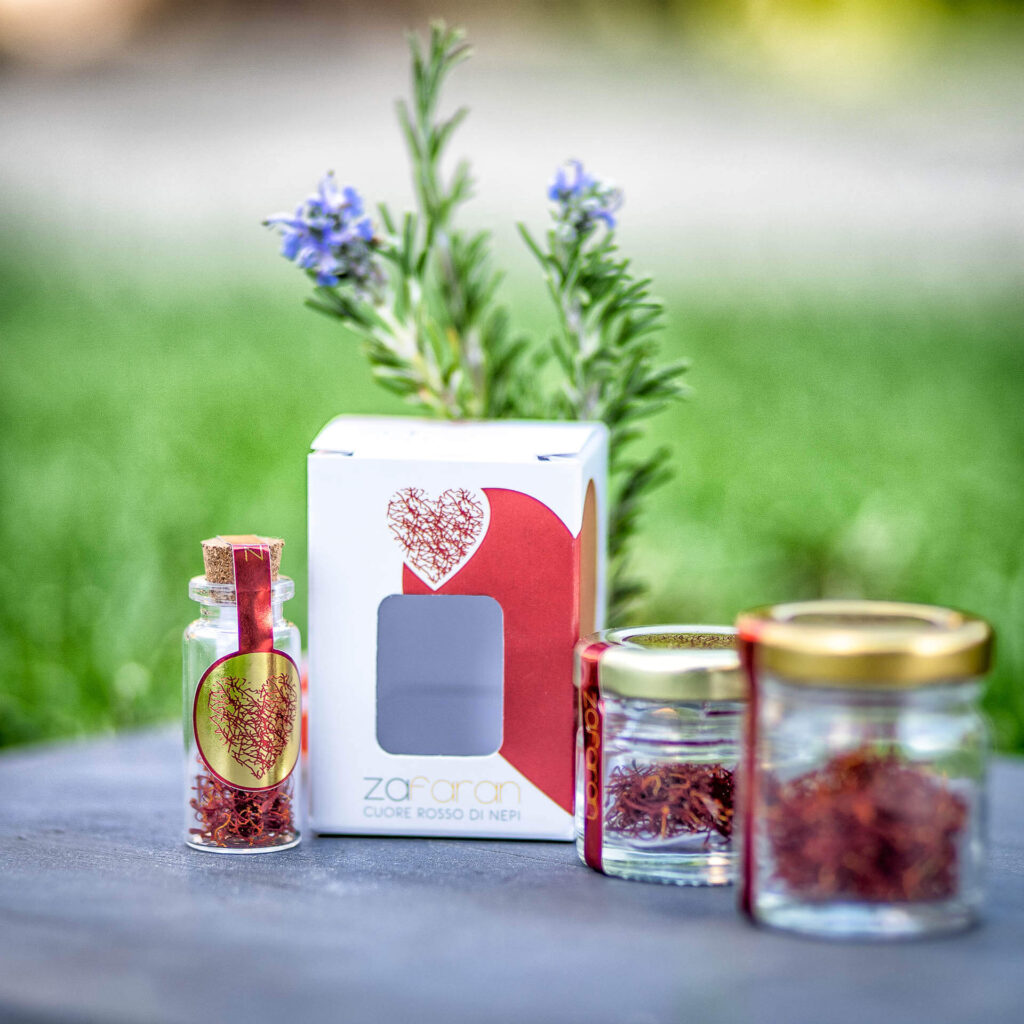
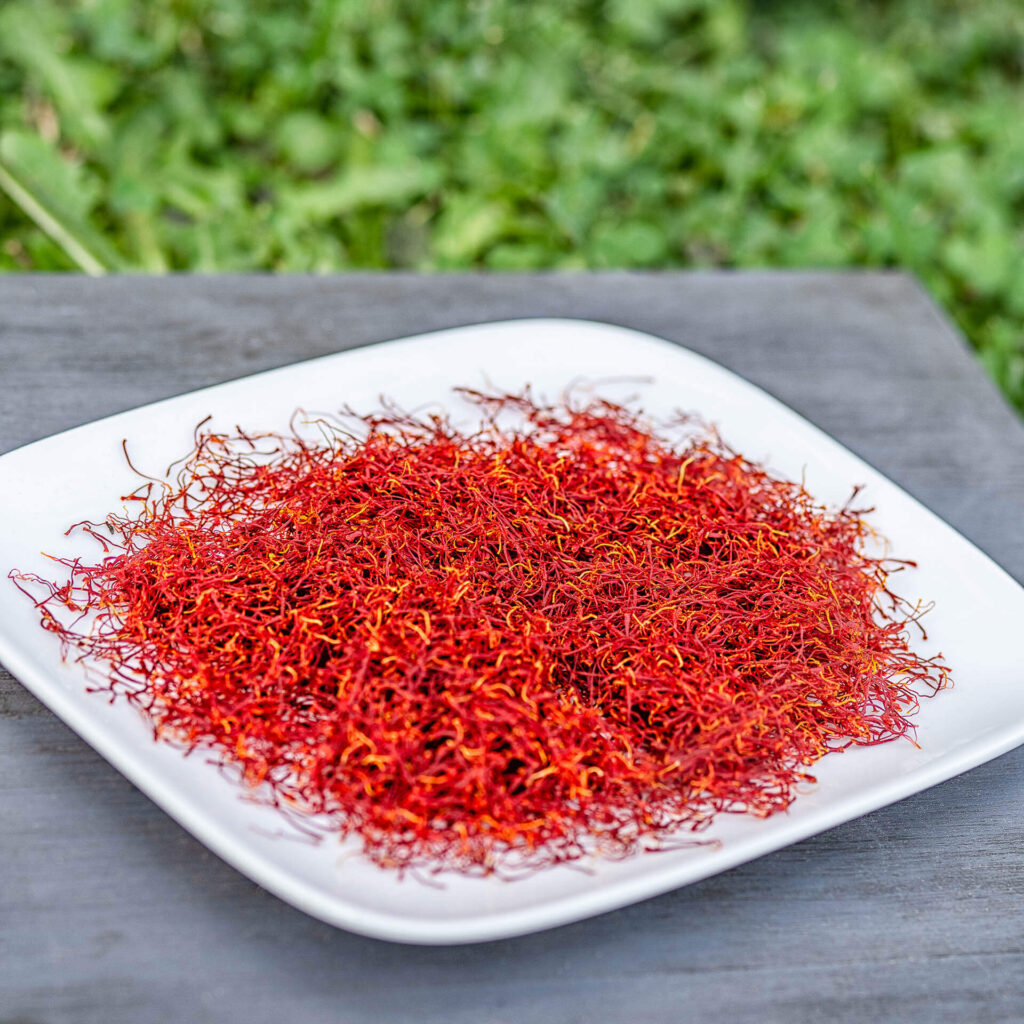
Saffron (Crocus sativus, its scientific name) is famous throughout the world for its organoleptic properties; its distinctive taste, aroma and colour are well known to everyone.
It is therefore used in cooking, from the classic ‘Milanese’ risotto right through to desserts: it is an excellent natural colouring agent that can be used in almost any dish, adding a touch of originality to all our meals.
Promotes a good mood
The stigma of its flower contains three main metabolites:
crocin (provides the colour);
picrocrocin (responsible for the bitter taste);
safranal, a volatile oil that gives saffron its characteristic aroma.
In recent years, the nutraceutical properties of saffron have also been rediscovered, namely its unique therapeutic properties as a powerful antioxidant.
In fact, it promotes a normal mood (good spirits), and is beneficial for digestive function and for alleviating menstrual cycle disorders.
It contains vitamins A, B1 and B2, and protects us from free radicals and ageing
Recent studies have also demonstrated its effectiveness in the field of ophthalmology, improving the pigmentation of the retina: Saffron helps to ‘restore’ vision, protects the eyes and combats age-related macular degeneration.
It also contains vitamins A, B1 and B2, protects us from free radicals and the effects of ageing, and boosts memory. Saffron also has unique properties that help you feel full, and recent studies have shown that it acts directly on the neurotransmitters responsible for appetite control.
Utilizziamo i cookie sul nostro sito Web per offrirti l'esperienza più pertinente ricordando le tue preferenze e le visite ripetute. Cliccando su “Accetta tutto” acconsenti all'uso di TUTTI i cookie. Tuttavia, puoi visitare "Impostazioni cookie" per fornire un consenso controllato.
This website uses cookies to improve your experience while you navigate through the website. Out of these, the cookies that are categorized as necessary are stored on your browser as they are essential for the working of basic functionalities of the website. We also use third-party cookies that help us analyze and understand how you use this website. These cookies will be stored in your browser only with your consent. You also have the option to opt-out of these cookies. But opting out of some of these cookies may affect your browsing experience.